
Dural leak symptoms can indicate cerebrospinal fluid escaping through a tear in the protective membrane surrounding the brain or spinal cord.
Therefore, early assessment is important because persistent leakage may cause debilitating headaches, interfere with daily activities, or increase complication risks.
Furthermore, symptoms vary by location, so recognizing warning signs helps clinicians select appropriate examinations and diagnostic tests.
What is the dural leak?
The dura mater is the tough outer membrane surrounding the brain and spinal cord, helping contain cerebrospinal fluid within protective spaces.
When this membrane develops a tear or opening, cerebrospinal fluid, commonly called CSF, may escape from its normal compartment.
For example, cranial leaks may allow fluid to reach the nose or ear, whereas spinal leaks commonly cause posture-related headaches.
However, nasal drainage and headaches have many possible causes, so neither symptom alone confirms a cerebrospinal fluid leak.
dural leak causes: Why Does the Dura Mater Tear?
A dural tear may follow trauma, surgery, medical procedures, or structural weaknesses affecting tissues around the brain and spinal cord.
Consequently, identifying the likely cause helps clinicians determine the leak’s location and select an appropriate diagnostic and treatment plan.
Head Trauma, Skull Base Fractures, and Previous Sinus/Spine Surgeries
For example, head injuries and skull base fractures can damage the dura, creating an opening through which cerebrospinal fluid escapes.
Similarly, certain sinus, skull base, or spinal operations may cause a leak when the dura is unintentionally opened or damaged.
Additionally, some spinal procedures, including lumbar punctures, may cause leakage; however, this complication does not occur after every procedure.
Spontaneous Dural Leaks & Increased Intracranial Pressure
In some cases, a leak develops without recent trauma or surgery and is therefore described as spontaneous, requiring further medical evaluation.
Additionally, spinal bone spurs, connective tissue disorders, and certain anatomical weaknesses may contribute to spontaneous spinal cerebrospinal fluid leaks.
Furthermore, raised intracranial pressure may contribute to some cranial leaks, particularly when an underlying skull base weakness exists.
the dural leak symptoms
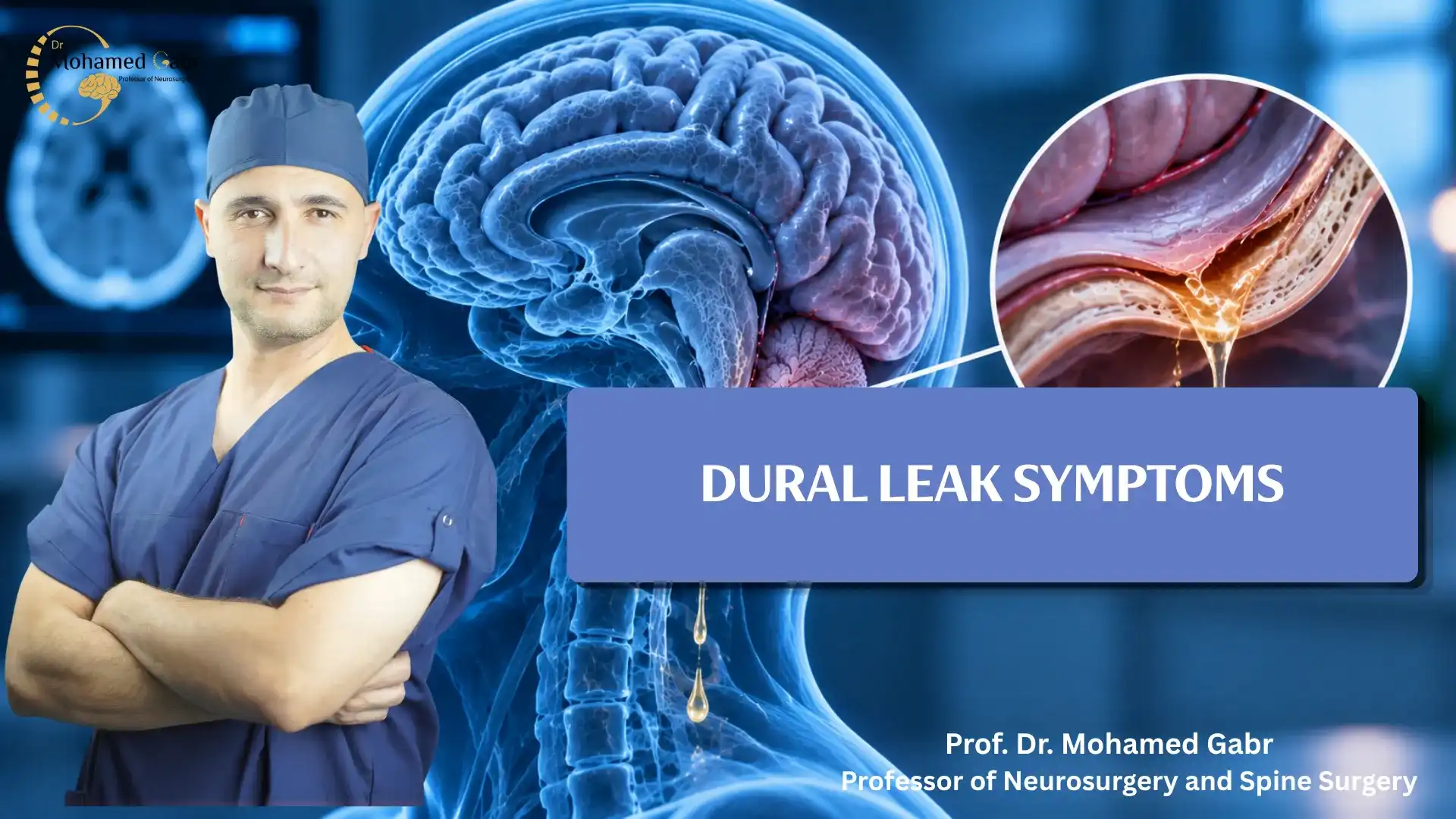
Dural leak symptoms depend on the leak’s location, severity, and cause, meaning patients may experience different combinations of symptoms.
Spinal leaks often cause headaches that worsen upright, while cranial leaks may produce clear fluid draining from the nose or ear.
Other possible symptoms include neck discomfort, nausea, dizziness, hearing changes, visual disturbances, or difficulty concentrating during everyday activities.
Importantly, these symptoms are not specific to CSF leakage, so clinical assessment is necessary to investigate other possible explanations.
Positional Headaches
A spinal cerebrospinal fluid leak may cause a headache that worsens when standing and improves after lying down, one of several dural leak symptoms.
Alongside the headache, some patients report neck pain, nausea, dizziness, ringing ears, or difficulty concentrating during normal daily activities.
However, positional headaches can have other causes, so doctors consider the full history and examination before ordering investigations.
Physical Signs of a dural leak
A cranial leak may cause persistent, watery drainage from one nostril or an ear, particularly after head trauma or surgery.
Some people also notice a salty or metallic taste, ear fullness, or hearing changes accompanying the unusual fluid drainage, which may indicate dural leak symptoms.
Because these signs can have other explanations, persistent drainage after an injury or operation requires prompt medical assessment.
Why You Shouldn’t Ignore a Dural Leak: The Risk of Meningitis
A cranial CSF leak may create a pathway through which bacteria can enter, increasing the risk of meningitis.
Meningitis can become life-threatening; therefore, fever, neck stiffness, confusion, or severe worsening headache requires emergency medical evaluation.
In addition, some spinal leaks may be associated with complications such as subdural fluid collections or bleeding.
Seek urgent care when suspected leakage accompanies new neurological changes, fever, confusion, or other rapidly worsening dural leak symptoms.
How Do Neurosurgeons Diagnose a Dural Leak?
Initially, diagnosis begins with a detailed medical history, physical examination, and tests selected according to the suspected leak’s location.
Because cranial and spinal leaks can present differently, specialists select investigations based on symptoms, previous procedures, and clinical findings.
The Importance of Patient History in the dural leak
First, doctors ask when symptoms began, whether headaches change with posture, and whether trauma or surgery occurred recently.
Additionally, they may ask about nasal or ear drainage, previous spinal procedures, connective tissue disorders, and possible infection symptoms.
However, although medical history can suggest a leak, it cannot reliably establish the exact location without further evaluation.
Testing to Confirm a dural leak
When cranial leakage is suspected, collected nasal or ear fluid may undergo testing for beta-2 transferrin to confirm its cerebrospinal fluid origin.
Importantly, this laboratory marker helps distinguish cerebrospinal fluid from ordinary secretions, although results require interpretation alongside clinical findings.
By contrast, suspected spinal leaks often require imaging because fluid testing may not identify the precise spinal defect.
Types of Imaging Used to dural leak
For example, MRI can reveal findings associated with spinal leakage and changes involving the brain or surrounding tissues.
Meanwhile, high-resolution CT can help identify skull base defects, while CT cisternography may localize selected cranial leaks.
If routine imaging remains inconclusive, specialists may consider CT myelography or other targeted studies to locate a spinal leak.
Therefore, because no single test identifies every leak, specialists select investigations according to clinical presentation and suspected location.
Advanced Treatment Options: Closing the Dural Tear Safely
Overall, treatment depends on the leak’s location, cause, severity, and response to initial management rather than one universal approach.
Accordingly, some patients receive conservative care, whereas persistent or complicated leaks may require targeted procedures or surgical repair.
Read also: acute hemorrhage in brain
Conservative Management & Epidural Blood Patch
Initially, clinicians may recommend conservative measures for selected patients while monitoring symptoms and determining whether further treatment is necessary.
For certain spinal leaks, an epidural blood patch introduces the patient’s blood into the epidural space to help seal leakage.
However, this procedure is not suitable for every leak, so specialists assess its appropriateness according to individual findings.
Read also: acute intracerebral hemorrhage treatment
Scarless Endoscopic Endonasal Repair
For suitable cranial leaks, endoscopic endonasal surgery allows surgeons to reach selected skull base defects through the nasal passages.
After identifying the opening, the surgeon uses appropriate repair materials or tissue grafts to close the defect.
Consequently, this approach avoids an external facial incision, although suitability depends on the defect’s location, anatomy, and complexity.
Read also: acute subdural hematoma time frame
Microsurgical Dural Repair
When a spinal leak persists, or its source is identified, surgery may be considered to close the dural defect.
Depending on the case, repair may involve sutures, tissue grafts, or other techniques selected for the underlying cause.
For complex leaks, specialists use targeted imaging and careful surgical planning to choose an approach addressing the identified defect.
Why Choose Dr. Mohamed Gabr for Dural Leak Diagnosis and Repair?
Prof. Dr. Mohamed Gabr is a neurosurgery and spine surgery professor at Kasr Al Ainy Faculty of Medicine, Cairo University.
Additionally, he trained internationally and performed over 1,000 microsurgical procedures involving aneurysms, vascular malformations, and cerebral bypasses, demonstrating Cerebrovascular Surgery expertise.
Therefore, his approach to suspected dural leaks includes careful assessment, appropriate diagnostic testing, and individualized treatment planning based on clinical findings.
- Diagnostic Precision: First, he reviews symptoms and selects appropriate fluid tests and imaging to help identify the location of suspected leaks.
- Endoscopic Skull Base Repair: For suitable cranial leaks, endoscopic techniques can repair defects through the nose without requiring an external facial incision.
- Microsurgical Repair: When necessary, microsurgical techniques address selected complex dural defects while assessing contributing factors, including raised intracranial pressure.
Ultimately, treatment recommendations depend on the leak’s location, underlying cause, complexity, and diagnostic findings to determine the most appropriate approach.
FAQ: Dural Leak Symptoms
Find clear answers to common questions about dural leak symptoms, diagnosis, treatment options, and when to seek urgent medical care.
Can a dural leak heal without surgery?
Some leaks improve with conservative management, but persistent leakage may require a blood patch, targeted procedure, or surgical repair.
Is clear nasal fluid always a cerebrospinal fluid leak?
No, ordinary nasal secretions have many causes, but persistent watery drainage after trauma or surgery needs prompt medical assessment.
Which test confirms a cranial cerebrospinal fluid leak?
Beta-2 transferrin testing of collected fluid and appropriate imaging can help confirm and localize suspected cranial leakage.
When should someone seek emergency care for a suspected leak?
Seek emergency care for fever, neck stiffness, confusion, severe worsening headache, or neurological changes accompanying suspected cerebrospinal fluid leakage.
Conclusion
Recognizing dural leak symptoms early helps patients seek timely medical assessment and reduce the risk of serious complications.
Once the leak is identified, specialists can select appropriate treatment based on its location, cause, and clinical findings.
For this reason, consult a qualified neurosurgeon to discuss your symptoms, necessary diagnostic tests, and suitable treatment options.
Sources
- Cleveland Clinic — Cerebrospinal Fluid (CSF) Leak
- Cedars-Sinai — Signs of CSF Leak
- Spinal CSF Leak Foundation — Diagnosis of Spinal CSF Leak
- Northwestern Medicine — Cerebrospinal Fluid Leak FAQ
- Houston Methodist — How Long Can You Have a CSF Leak Without Knowing?
- Mayo Clinic — CSF Leak: Diagnosis and Treatment