
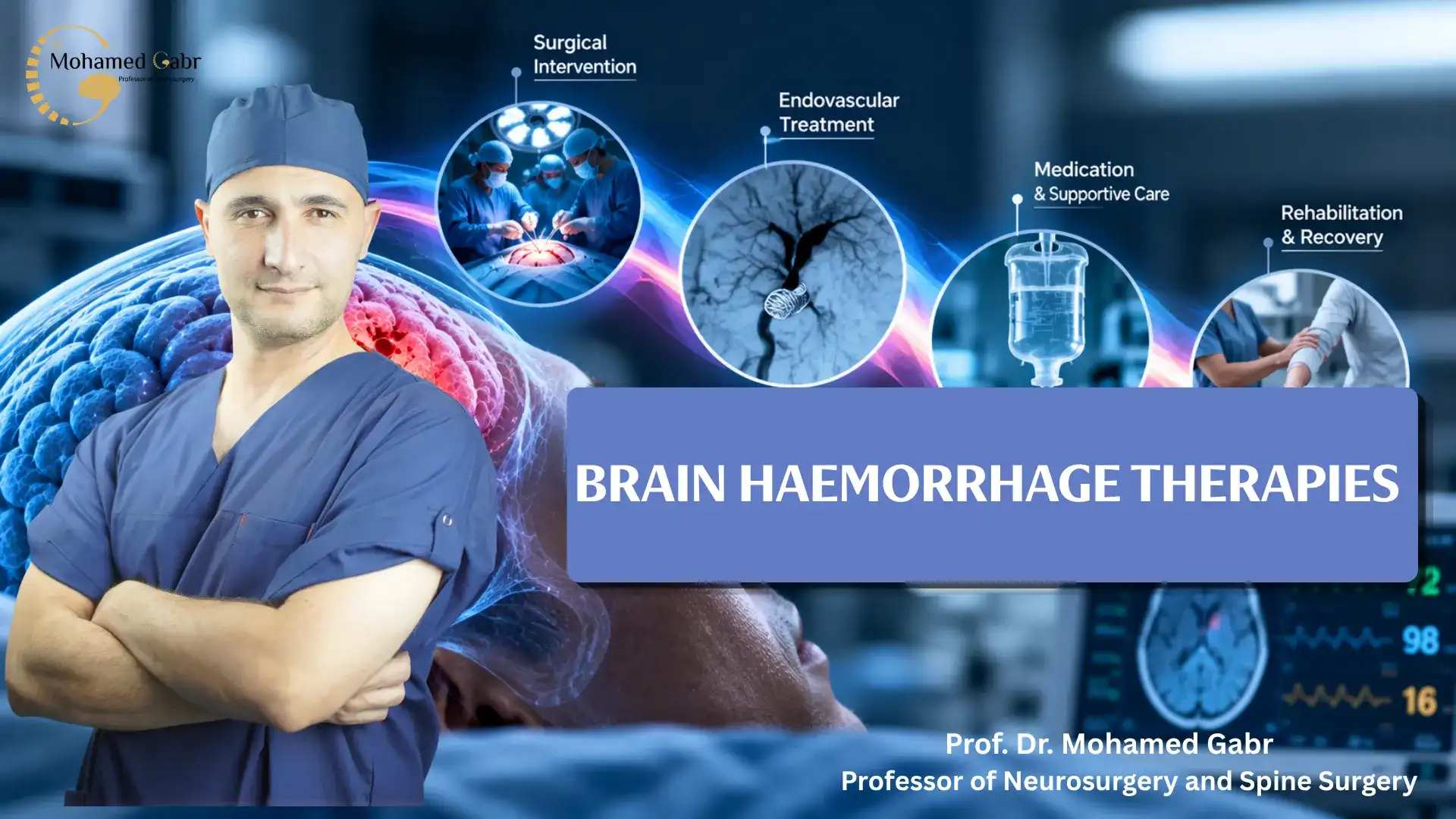
Brain haemorrhage therapies include emergency medical treatment, surgery when indicated, and rehabilitation tailored to the bleeding type and each patient’s condition.
Therefore, treatment depends on whether bleeding occurs within brain tissue, around the brain, or after a traumatic head injury.
Depending on the diagnosis, brain haemorrhage therapies may include intensive medical care, surgery, aneurysm repair, and rehabilitation.
Furthermore, sudden severe headaches, weakness, confusion, seizures, or reduced consciousness require immediate emergency medical assessment without delay.
Risk Factors for a Brain Hemorrhage & Underlying Causes
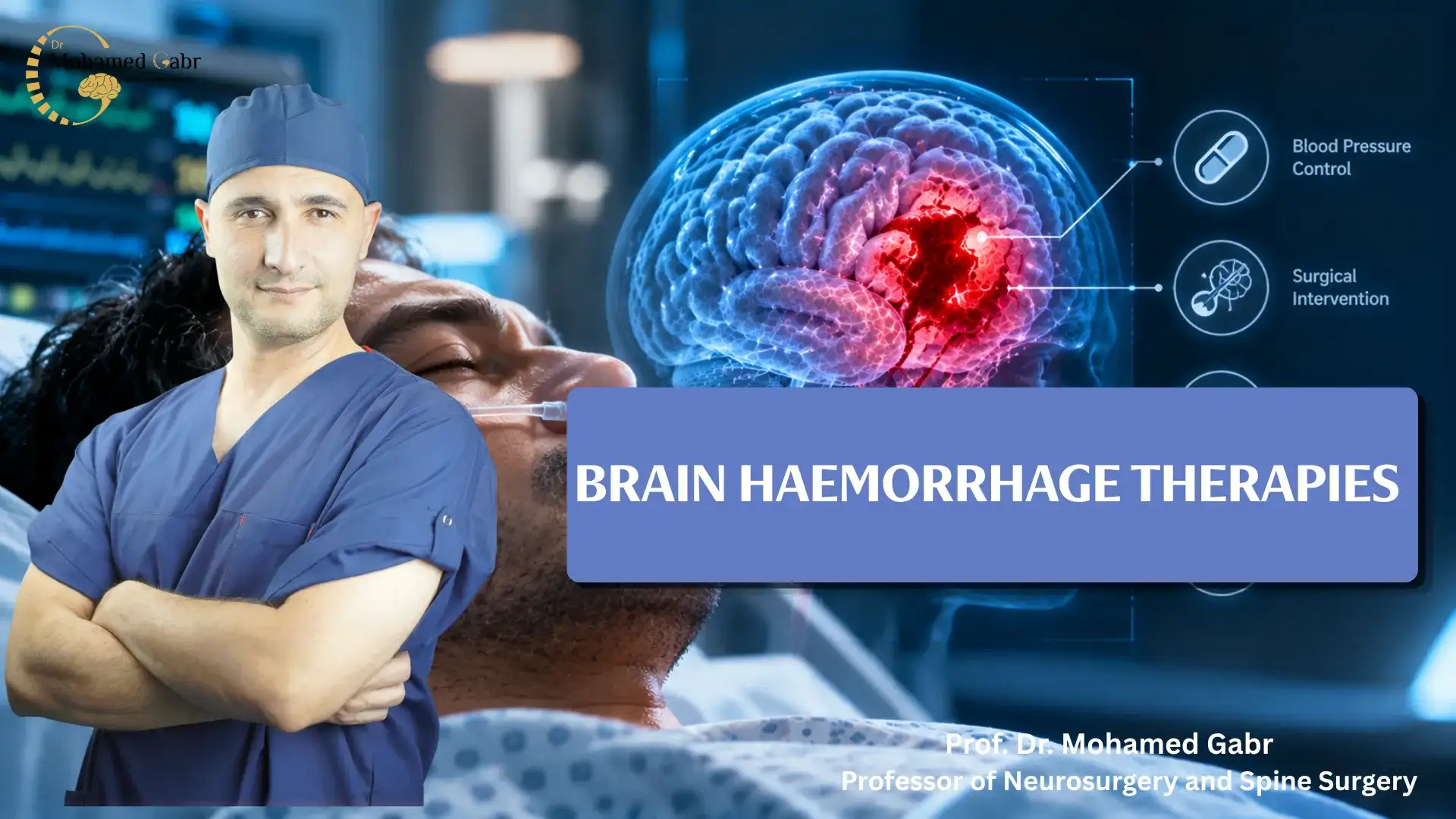
A brain haemorrhage occurs when a blood vessel ruptures, allowing blood to enter brain tissue or surrounding spaces.
For example, uncontrolled high blood pressure can increase the risk of spontaneous intracerebral haemorrhage in susceptible individuals.
Other contributors include anticoagulant medicines, bleeding disorders, vascular abnormalities, and certain conditions affecting cerebral blood vessels.
Meanwhile, a ruptured aneurysm may cause subarachnoid haemorrhage, whereas falls and collisions can cause traumatic bleeding.
To identify the cause, doctors carefully assess symptoms, medication history, neurological findings, and brain imaging results before selecting treatment.
Warning Signs You Should Never Ignore
Warning signs include sudden severe headache, vomiting, neck stiffness, weakness, speech difficulty, confusion, seizures, or reduced consciousness.
If these symptoms appear, call emergency services immediately instead of waiting for improvement or attempting self-treatment.
brain haemorrhage therapies : What Are Your Options?
Overall, treatment depends on the bleeding type, location, severity, imaging findings, and the patient’s clinical condition and neurological status.
Therefore, specialists select brain haemorrhage therapies after reviewing the diagnosis, medical history, examination findings, and treatment risks.
Acute Medical & Neuro-ICU Therapies
Initially, hospital teams stabilise breathing and circulation, monitor neurological function closely, and identify complications that require urgent treatment.
When appropriate, clinicians manage blood pressure, correct clotting abnormalities, or reverse anticoagulant effects to reduce further bleeding.
Additionally, selected patients with raised intracranial pressure may require hyperosmolar treatment or cerebrospinal fluid drainage under specialist supervision.
However, corticosteroids should not treat raised pressure caused by spontaneous intracerebral haemorrhage because they have not shown benefit.
Importantly, doctors do not routinely recommend preventive antiseizure medication for spontaneous intracerebral haemorrhage without evidence of seizures.
When consciousness fluctuates unexpectedly, continuous electroencephalography may help clinicians detect seizures that routine observation might miss.
Once clinicians confirm seizures, they select appropriate medication according to the patient’s condition and specialist recommendations for brain haemorrhage therapies.
For aneurysmal subarachnoid haemorrhage, doctors generally reserve preventive medication for selected high-risk patients rather than prescribing it routinely.
Furthermore, specialists generally avoid phenytoin in aneurysmal subarachnoid haemorrhage because its use is associated with excess morbidity.
Microsurgical Hematoma Evacuation & Decompression Therapies
Surgery may become necessary when bleeding causes dangerous pressure, neurological deterioration, or other serious complications requiring urgent intervention.
For selected spontaneous intracerebral haemorrhages, minimally invasive evacuation may reduce mortality, although benefits for functional recovery remain uncertain.
Meanwhile, cerebellar haemorrhage requires urgent assessment when deterioration, brainstem compression, obstructive hydrocephalus, or haematoma volume reaches fifteen millilitres.
For acute traumatic subdural haematomas, guidelines recommend evacuation when thickness exceeds ten millimetres or midline shift exceeds five millimetres.
However, these thresholds apply specifically to traumatic subdural haematomas, not spontaneous intracerebral or aneurysmal subarachnoid haemorrhage.
Other findings, including neurological deterioration, abnormal pupils, or raised intracranial pressure, may also influence urgent surgical decisions.
Surgery to treat subarachnoid haemorrhage (SAH) (Microsurgical Clipping & Vascular Repair)
A ruptured cerebral aneurysm requires prompt specialist evaluation and treatment planning to reduce the risk of rebleeding.
Accordingly, specialists should secure the aneurysm as early as feasible, preferably within twenty-four hours when clinically appropriate.
Microsurgical clipping and endovascular treatment are established options, and specialists select between them according to aneurysm anatomy and clinical circumstances.
In addition, Cerebrovascular Surgery expertise helps specialist teams assess complex vascular conditions and determine appropriate treatment strategies.
After treatment, clinicians carefully monitor patients for delayed cerebral ischaemia, hydrocephalus, and seizures, which may significantly complicate recovery.
Read also: acute subdural hematoma time frame
Recovery after a Brain Hemorrhage: Restorative & Rehabilitation Therapies
Recovery depends on bleeding severity, location, complications, previous health, and the patient’s response to treatment over time.
For example, physical therapy supports movement and balance, while occupational therapy helps patients manage everyday activities more independently.
Meanwhile, speech-language therapy may address communication or swallowing difficulties, and cognitive rehabilitation can support memory and attention.
Therefore, rehabilitation teams should review individual goals regularly because recovery timelines, functional progress, and ongoing support needs vary considerably.
Read also: dural leak symptoms
Prevention of Brain Hemorrhage: Can Brain Hemorrhage Be Prevented?
Although not every haemorrhage is preventable, managing risk factors can reduce the likelihood of some bleeding events.
For instance, controlling blood pressure, attending follow-up appointments, and following prescribed treatment plans can support vascular health.
Additionally, patients should never stop anticoagulant or antiplatelet medication without discussing the decision with their treating clinicians.
After head injuries, seek urgent assessment, especially when symptoms worsen or the injured person takes blood-thinning medication.
Read also: csf nasal leak symptoms
How to Choose the Best Doctor for Brain Hemorrhage?
When choosing a brain haemorrhage specialist, patients should prioritize emergency judgment, microsurgical expertise, and experience supporting neurological rehabilitation.
Dr. Mohamed Gabr specializes in neurosurgery and spine surgery at Kasr Al Ainy Faculty of Medicine, Cairo University.
He graduated with honours and an excellent grade, then completed postgraduate studies in his medical specialty.
He also earned a doctorate in neurosurgery, demonstrating advanced academic training in this specialized surgical field.
His international training includes the Barrow Neurological Institute in the United States and Augsburg Hospital in Germany.
During this training, he developed skills in microsurgical techniques and complex neurosurgical procedures for challenging neurological conditions.
His reported areas of expertise include cerebral aneurysms, arteriovenous malformations (AVMs), cerebral bypass surgery, and brain and skull base tumours.
Dr. Mohamed Gabr provides care for brain haemorrhage patients using different treatment approaches tailored to each patient’s clinical condition.
Dr. Mohamed Gabr delivers world-class brain haemorrhage therapies and maximum patient safety through:
-
Specialized Expertise in Surgery to Treat Subarachnoid Haemorrhage (SAH)
Utilizing high-definition surgical microscopes and 3D Neuronavigation to safely clear basal cistern clots and repair ruptured vascular lesions while protecting vital cerebral arteries.
-
Comprehensive Medical & Microsurgical Options
Tailoring the exact therapeutic approach to each patient’s condition—integrating advanced neuro-ICU protocols (controlling brain swelling and vasospasm) with minimally invasive hematoma evacuation when surgery is essential.
-
Holistic Recovery & Secondary Prevention
Supporting patients beyond the operating room with structured neuro-rehabilitation plans to restore motor and speech functions, alongside targeted strategies for the prevention of brain hemorrhage recurrence in the future.
FAQ: Brain Haemorrhage Therapies
These FAQs about brain haemorrhage therapies cover medical treatment, surgery, recovery, rehabilitation, and prevention to help patients understand available care options.
Are all brain haemorrhages treated with surgery?
No, some patients need intensive medical management, while others require surgery or aneurysm repair according to their clinical condition.
Do all patients need medication to prevent seizures?
No, doctors do not routinely recommend preventive antiseizure medication for spontaneous intracerebral haemorrhage without evidence of seizures.
How soon should a ruptured brain aneurysm be treated?
Specialists recommend treatment as early as feasible, preferably within twenty-four hours when clinically appropriate for the patient.
Can rehabilitation improve recovery after a brain haemorrhage?
Rehabilitation can support movement, communication, swallowing, and daily functioning; however, individual outcomes and recovery timelines vary considerably.
Conclusion
Ultimately, effective brain haemorrhage therapies depend on identifying the bleeding type, stabilising the patient, and selecting evidence-based treatment.
Medical care, surgery, aneurysm repair, and rehabilitation each have distinct roles depending on the patient’s clinical condition and needs.
Therefore, prompt emergency assessment and coordinated specialist follow-up remain essential for treatment, recovery, and prevention of further complications.
Medical Sources
- https://www.ahajournals.org/doi/10.1161/STR.0000000000000407
- https://www.ahajournals.org/doi/10.1161/STR.0000000000000436
- https://braintrauma.org/coma/guidelines/surgical
- https://www.mayoclinic.org/diseases-conditions/intracranial-hematoma/diagnosis-treatment/drc-20356149
- https://my.clevelandclinic.org/health/diseases/14480-brain-bleed-hemorrhage-intracranial-hemorrhage