
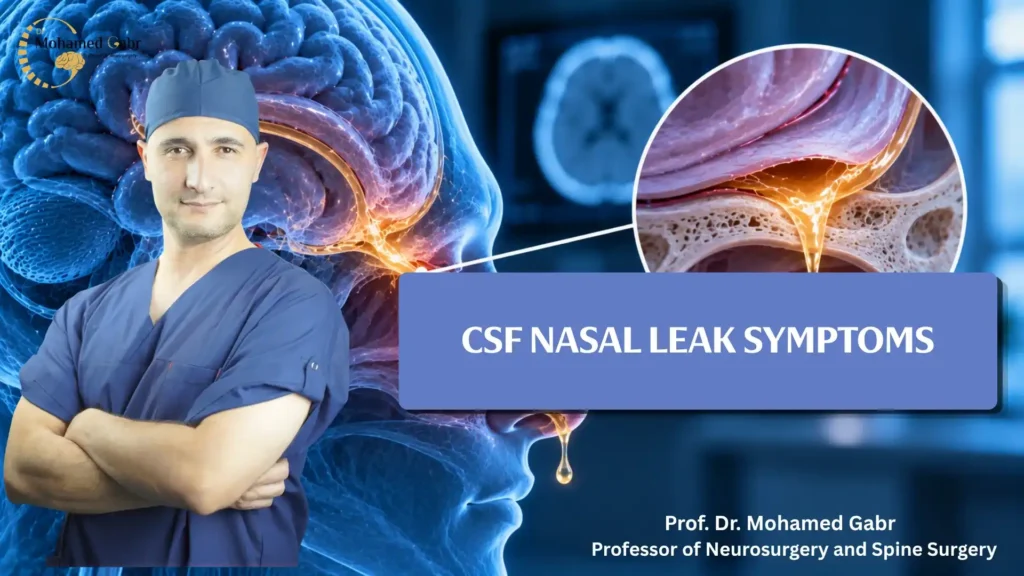
csf nasal leak symptoms may resemble an ordinary runny nose, but certain patterns can indicate cerebrospinal fluid escaping through a skull base defect.
Recognizing these differences matters because an untreated cranial leak may increase the risk of meningitis and other serious complications.
However, nasal discharge alone cannot confirm a cerebrospinal fluid leak, so appropriate medical assessment is essential for accurate diagnosis.
What Is a Cerebrospinal Fluid (CSF) Leak?
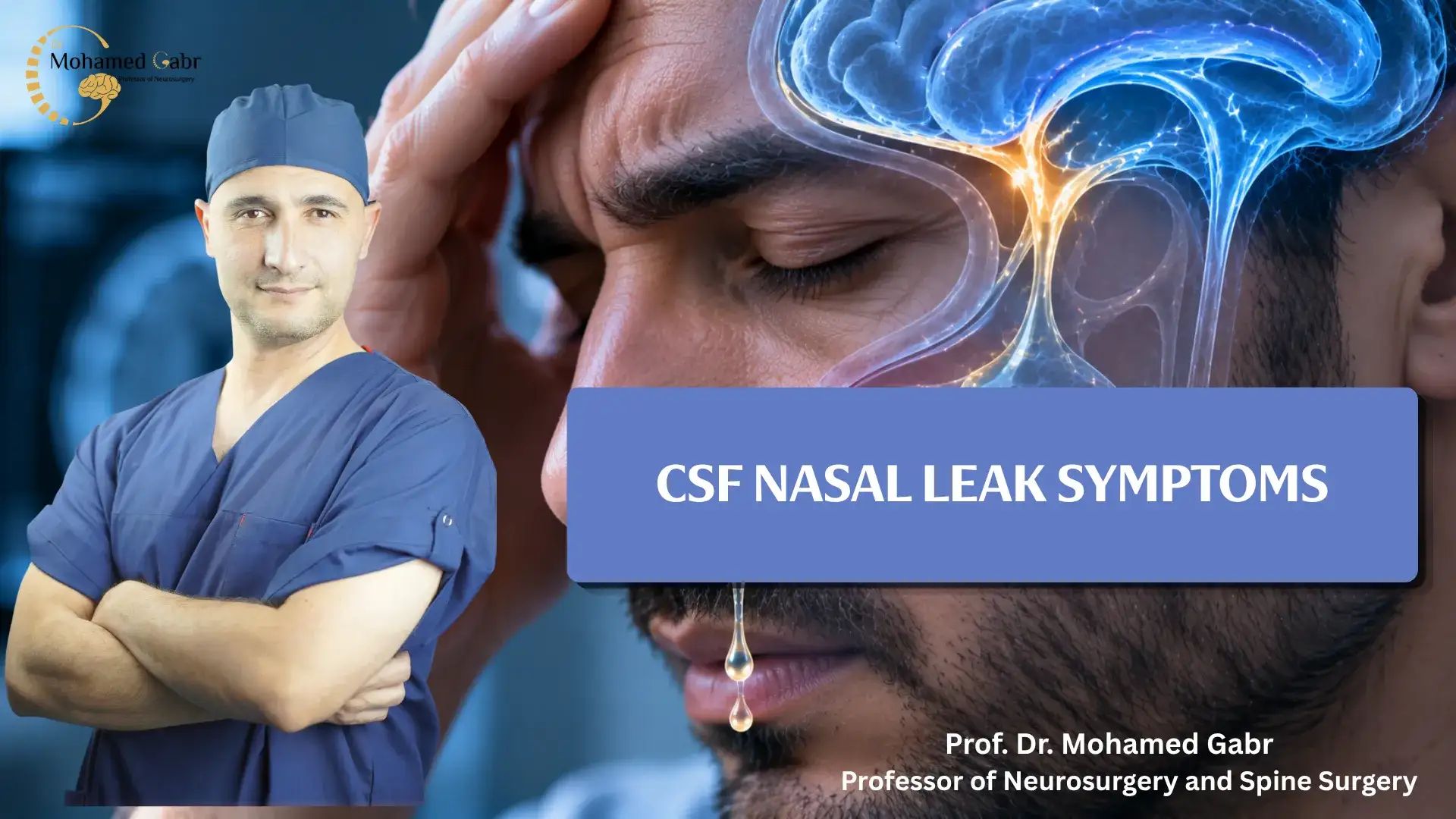
Cerebrospinal fluid surrounds the brain and spinal cord, cushioning these structures and helping maintain their normal protective environment.
A cerebrospinal fluid leak occurs when this fluid escapes through an abnormal opening in the surrounding membranes or adjacent bone.
Cranial leaks may allow fluid to drain through the nose or ear, depending on the defect’s location and surrounding anatomy.
Some leaks develop after head trauma or surgery, while others occur spontaneously because of underlying anatomical or pressure-related factors.
Types of CSF leaks (Cranial Nasal Leaks vs. Spinal Leaks)
| Feature | Cranial CSF Leaks | Spinal CSF Leaks |
| Location | Occur due to defects near the skull base. | Occur around the spinal cord. |
| Common Symptoms | May cause cerebrospinal fluid (CSF) drainage through the nose or ears. | May cause headaches that worsen when standing and improve after lying down. |
| Diagnostic Approach | Depends on the suspected skull base defect, cause, symptoms, and imaging findings. | Depends on the suspected spinal leak, symptoms, neurological findings, and appropriate imaging. |
| Factors Affecting Presentation | Symptoms vary according to the leak’s location, cause, and severity. | Symptoms vary according to the leak’s location, cause, and severity. |
How Common Is a csf nasal leak? & Who Is at Risk for a CSF Leak?
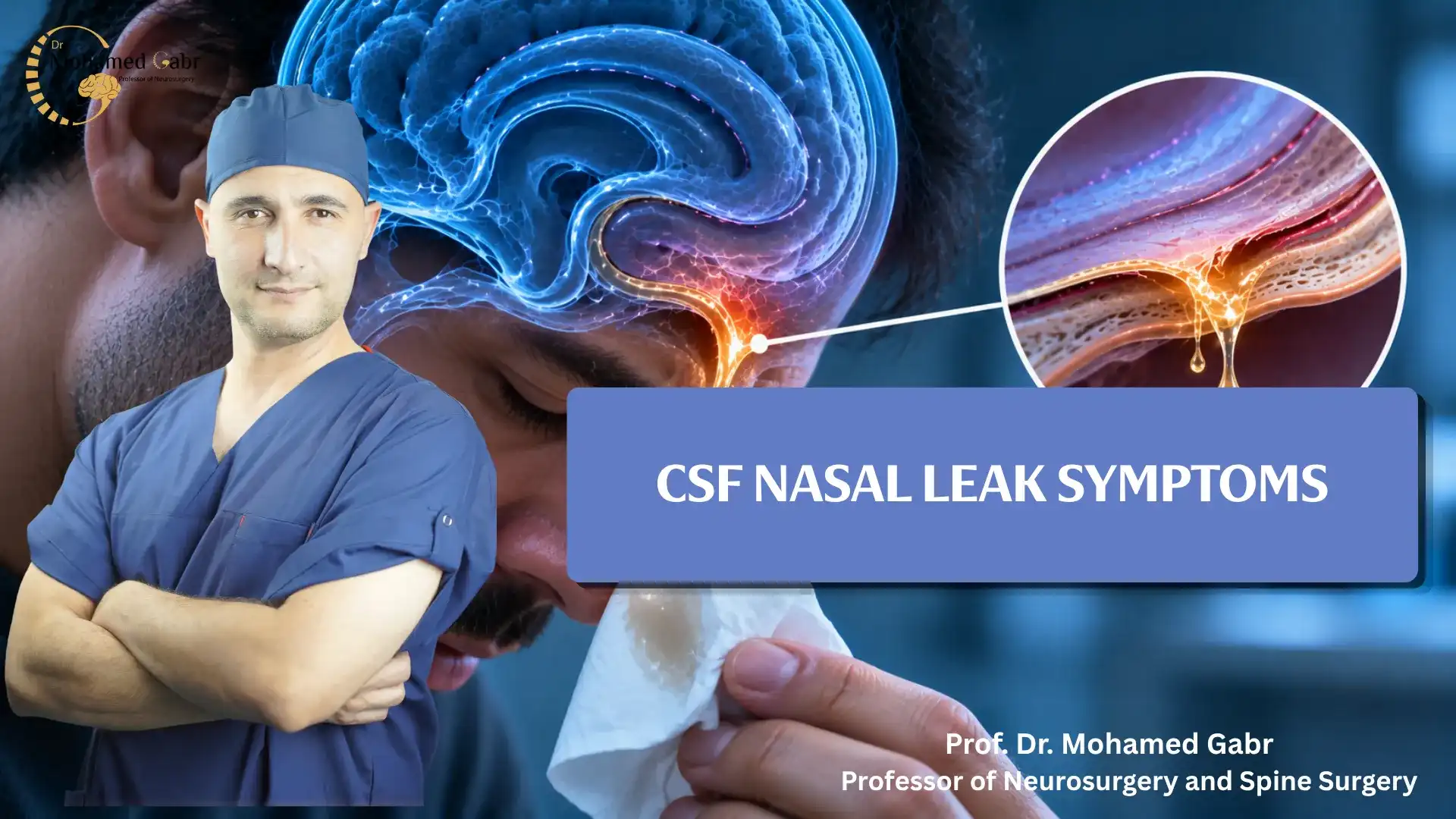
Cranial cerebrospinal fluid leaks are uncommon, and their likelihood varies according to medical history, trauma, surgery, and individual anatomical factors.
Risk factors include head injuries, previous skull base or sinus procedures, certain skull base abnormalities, and conditions associated with raised intracranial pressure.
Nevertheless, some patients develop spontaneous leaks without a clear history of trauma or recent surgery.
A clinician considers these factors alongside symptoms and examination findings rather than diagnosing a leak from risk factors alone.
csf nasal leak symptoms
Typical csf nasal leak symptoms may include persistent watery drainage from one nostril, particularly when the discharge appears unusually thin.
Some patients notice a salty or metallic taste because fluid drains from the nasal cavity into the throat.
However, these features are not diagnostic by themselves, and allergies, infections, and other nasal conditions can cause similar symptoms.
CSF Nasal Leak vs. Allergies: How to Spot the Difference (One-Sided Watery Drip & Salty Taste)
Allergies commonly cause sneezing, nasal itching, congestion, and watery discharge affecting both nostrils, although individual symptoms can vary.
A suspected cerebrospinal fluid leak may produce continuous, clear drainage predominantly from one nostril, sometimes accompanied by a salty taste.
Symptoms triggered by bending forward may raise suspicion, but this pattern alone cannot establish the diagnosis.
Do not attempt home tests or deliberately provoke drainage; instead, describe the symptoms and their timing to a healthcare professional.
Warning Signs That Should Not Be Ignored
Some patients experience headaches related to pressure changes, while others develop visual disturbances or a sensation of ear fullness.
These symptoms have several possible causes, so clinicians must interpret them alongside the patient’s history and examination results.
Fever, neck stiffness, severe headache, confusion, or sensitivity to light may indicate meningitis or another medical emergency.
Seek emergency medical care immediately if these warning signs occur, particularly when a cerebrospinal fluid leak is suspected.
Is a CSF leak life-threatening? & Why Early Identification Matters
A cranial cerebrospinal fluid leak can create a pathway for bacteria to enter spaces surrounding the brain and cause meningitis.
Therefore, suspected leaks require timely assessment, although the urgency and treatment depend on the clinical circumstances.
Early evaluation helps clinicians confirm the diagnosis, identify the defect, assess complications, and determine the safest management plan.
When should I see my healthcare provider?
Arrange prompt medical evaluation for persistent unexplained watery nasal drainage, especially when it occurs predominantly on one side.
Tell your clinician about recent head injuries, sinus procedures, skull base surgery, headaches, visual changes, and previous meningitis.
Seek emergency care for fever with neck stiffness, confusion, severe headache, or other rapidly worsening neurological symptoms.
What Happens If You’re Diagnosed?
When clinicians suspect a leak, they assess CSF nasal leak symptoms alongside medical history, laboratory testing, and appropriate imaging studies.
Treatment depends on the leak’s cause, location, persistence, associated complications, and response to initial conservative management.
Some selected cases may initially require observation and medical precautions, while persistent leaks may need surgical repair.
Read also: acute intracerebral hemorrhage treatment
Accurate Lab Testing (Beta-2 Transferrin) & High-Resolution Skull Base Imaging
Beta-2 transferrin testing helps confirm whether collected nasal fluid contains cerebrospinal fluid, supporting accurate diagnosis of suspected CSF nasal leak symptoms.
High-resolution computed tomography can identify skull base bone defects, while magnetic resonance imaging provides additional information about surrounding soft tissues.
The choice and sequence of investigations depend on clinical findings, available expertise, and whether initial imaging clearly identifies the leak.
Patients should follow their treating team’s instructions about sample collection, imaging, and necessary precautions before treatment.
Read also: acute subdural hematoma time frame
Scarless Endoscopic Endonasal Repair
Endoscopic endonasal repair allows surgeons to access selected skull base defects through the nostrils using specialized instruments and endoscopic visualization.
During repair, the surgical team closes the defect with suitable graft materials selected according to the leak’s characteristics.
Not every patient requires the same technique; treatment depends on anatomy, defect location, clinical findings, and CSF nasal leak symptoms.
The surgeon should explain expected benefits, potential complications, alternatives, and recurrence risks before obtaining informed consent.
Read also: dural leak symptoms
What Recovery Looks Like After Treatment
Recovery varies according to the leak’s cause, the repair performed, associated conditions, and the patient’s overall health.
After surgery, clinicians may recommend avoiding heavy lifting, straining, nose blowing, or other activities that could increase pressure.
Follow the individual postoperative plan because restrictions, monitoring requirements, and follow-up schedules differ between patients and procedures.
Contact the treating team promptly if drainage returns, symptoms worsen, or new neurological symptoms develop after treatment.
Why Choose Dr. Mohamed Gabr for CSF Nasal Leak Repair?
An untreated nasal CSF leak can allow bacteria to reach the brain, making timely diagnosis and appropriate treatment essential to reduce meningitis risk.
Prof. Dr. Mohamed Gabr is a Professor of Neurosurgery and Spine Surgery at Kasr Al Ainy Faculty of Medicine, Cairo University.
He graduated with honors, earned his master’s and doctoral degrees in neurosurgery, and received international training at Barrow Neurological Institute and Augsburg Hospital.
His expertise includes Cerebrovascular Surgery, supported by advanced neurosurgical techniques that may incorporate neuro-endoscopy, surgical microscopes, and three-dimensional neuronavigation when clinically appropriate.
- Scarless Endoscopic Endonasal Repair: Dr. Mohamed Gabr accesses suitable skull base defects through the nostrils, avoiding external incisions and traditional open craniotomy in selected patients.
- High-Success Multilayer Skull Base Reconstruction: Suitable graft materials and reconstructive techniques help seal the leak site and reduce the risk of persistent cerebrospinal fluid leakage.
- Individualized Recovery and Follow-Up: Minimally invasive techniques, appropriate postoperative monitoring, and tailored activity guidance support recovery while helping clinicians identify potential complications early.
FAQ: CSF Nasal Leak Symptoms
This FAQ about CSF nasal leak symptoms explains common warning signs, diagnostic tests, potential complications, and available treatment options.
Can a CSF nasal leak stop on its own?
Some leaks may resolve with conservative management, but persistent or complicated leaks need specialist assessment to determine appropriate treatment.
Is clear nasal discharge always a CSF leak?
No, clear discharge commonly occurs with allergies or infections, and laboratory testing may be needed when clinical suspicion remains.
How do doctors confirm a CSF nasal leak?
Doctors may test nasal fluid for beta-2 transferrin and use high-resolution CT or MRI to investigate the suspected defect.
Does every CSF nasal leak require surgery?
No, treatment depends on the cause, location, persistence, complications, and clinical assessment; some patients require endoscopic repair.
Conclusion
Recognizing csf nasal leak symptoms can help patients seek timely assessment when unusual watery nasal drainage persists without an obvious explanation.
Because symptoms overlap with common nasal conditions, laboratory confirmation and appropriate imaging are important for guiding treatment decisions.
Prompt specialist evaluation can identify complications and help determine whether observation, additional testing, or surgical repair is appropriate.