
Chromophobe adenoma symptoms may include headaches, visual changes, and hormonal problems when tumors affect nearby structures or pituitary function.
Early recognition helps patients understand possible warning signs and seek appropriate medical assessment before complications develop.
This guide covers diagnostic tests, treatment options, and recovery based on relevant clinical guidance and reliable medical information.
What Is a Chromophobe Adenoma?
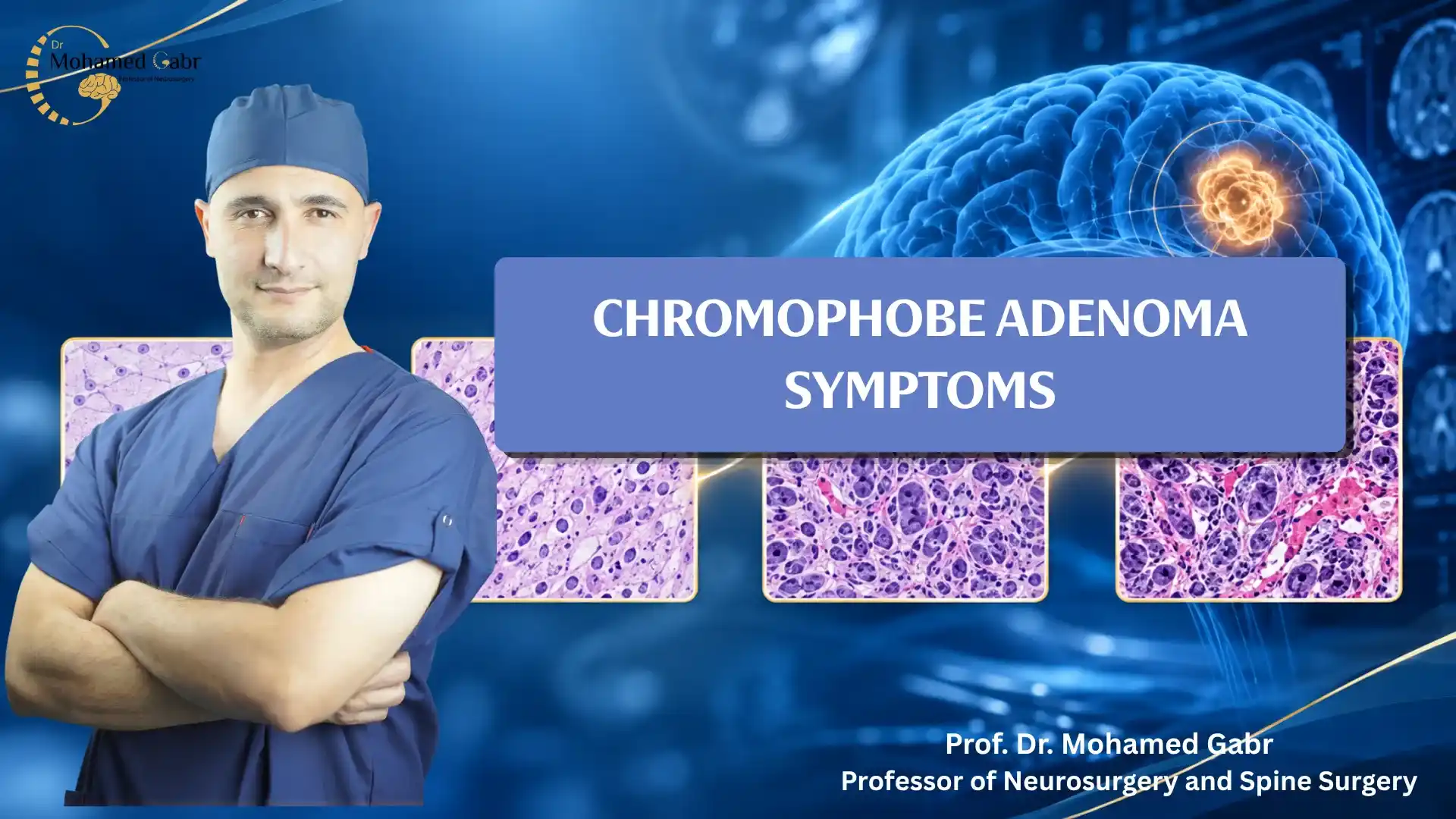
Historically, chromophobe adenoma described certain pituitary tumors according to their appearance under traditional microscopic staining methods.
Today, modern classification considers tumor cell lineage, hormone expression, pathology, and clinical behavior rather than staining appearance alone.
Some pituitary tumors are clinically nonfunctioning, meaning they do not cause recognizable symptoms from excessive hormone secretion.
However, these tumors may still compress nearby structures or impair normal pituitary hormone production as they enlarge.
The historical term alone cannot confirm a tumor’s subtype, hormone activity, growth pattern, or expected clinical behavior.
How Common Is a Chromophobe Adenoma? & Who Is at Risk?
Although pituitary adenomas are relatively common, the historical term chromophobe adenoma does not identify one precise modern tumor subtype.
Therefore, individual risk assessment depends on the confirmed diagnosis, tumor size, hormone activity, imaging findings, and clinical history.
Moreover, most pituitary tumors have no single identifiable cause, and symptoms alone cannot establish why a tumor developed.
Types of Chromophobe Adenoma: Microadenomas vs. Macroadenomas
| Feature | Microadenomas | Macroadenomas |
| Size | Less than 10 millimeters. | 10 millimeters or more. |
| Effect on Nearby Structures | Less likely to compress nearby structures because of their smaller size. | More likely to compress nearby anatomical structures. |
| Factors Affecting Symptoms | Symptoms depend on tumor location, growth, and hormonal activity. | Symptoms depend on tumor location, growth, and hormonal activity. |
chromophobe adenoma symptoms
Chromophobe adenoma symptoms may include headaches, visual disturbances, and hormonal changes, depending on the tumor’s size and location.
Early Signs of Chromophobe Adenoma
Some pituitary tumors cause no noticeable symptoms and are discovered incidentally during imaging performed for unrelated medical concerns.
Additionally, possible symptoms include headaches, fatigue, menstrual changes, reduced libido, or signs associated with pituitary hormone deficiencies.
Because these symptoms are nonspecific and may have many causes, medical assessment is necessary before attributing them to tumors.
Warning Signs That Should Not Be Ignored
For example, a growing pituitary tumor may compress the optic chiasm, causing peripheral vision loss or other visual field abnormalities.
Therefore, seek emergency care immediately for sudden severe headaches, abrupt visual changes, repeated vomiting, confusion, or reduced consciousness.
These symptoms may indicate pituitary apoplexy, which is a medical emergency requiring immediate evaluation and appropriate treatment.
Is a Chromophobe Adenoma Life-Threatening?
Although many pituitary adenomas are benign, complications can arise when tumors compress critical structures or disrupt essential hormone production.
Consequently, overall seriousness depends on tumor behavior, size, location, hormone function, and complications identified during clinical assessment.
Why Early Identification Matters to Save Your Vision
Early evaluation can identify pressure on visual pathways and help clinicians assess the risk of lasting vision impairment.
Depending on clinical findings, assessment may include dedicated pituitary MRI, hormone blood tests, and formal visual field testing.
When Should I See My Healthcare Provider?
Arrange medical evaluation for persistent headaches, unexplained hormonal changes, or new visual difficulties, particularly when symptoms progressively worsen.
However, sudden severe headache, rapidly worsening vision, or altered consciousness requires emergency assessment rather than a routine appointment.
Read also: brain stem glioma causes
Treatment for Chromophobe Adenoma
Treatment depends on the confirmed diagnosis, tumor size, symptoms, hormone results, proximity to the optic chiasm, and documented growth.
Accordingly, some tumors require monitoring rather than immediate intervention, while others may need surgery, hormone replacement, or radiation therapy.
Read also: brain tumor symptoms in adults
Endoscopic Transsphenoidal Surgery
Where appropriate, endoscopic transsphenoidal surgery reaches pituitary tumors through the nasal passages, avoiding a conventional external incision in many cases.
For this reason, surgery may be recommended for visual impairment, significant compression, or other clinically important findings.
Although this approach avoids an external head incision, it remains a major procedure with risks requiring specialist discussion.
Read also: benign brain tumor symptoms in women
Hormone Replacement Therapy & Advanced Radiation Options
When testing confirms pituitary deficiencies, hormone replacement may be required, with medication and monitoring tailored to individual needs.
Meanwhile, radiation therapy may be considered for selected residual, recurrent, or difficult-to-treat pituitary tumors after multidisciplinary specialist evaluation.
Read also: brain tumor stages and symptoms
What Recovery Looks Like After Treatment
However, recovery varies according to tumor size, surgical approach, baseline hormone function, complications, and the specific treatment each patient receives.
Additionally, follow-up may include MRI scans, hormone testing, and visual assessments to monitor recovery and identify persistent or recurrent disease.
Therefore, patients should follow their treating team’s instructions and promptly report new visual symptoms, severe headaches, fever, or fluid leakage.
Why Choose Dr. Mohamed Gabr for Chromophobe Adenoma Surgery?
Chromophobe adenomas may compress the optic nerves and visual pathways, potentially causing progressive vision changes without timely diagnosis.
To address these tumors, Dr. Mohamed Gabr applies skull base techniques while prioritizing visual decompression and pituitary function preservation.
-
Endoscopic Transsphenoidal Surgery
This approach allows surgeons to access suitable pituitary tumors through the nasal passages without a conventional external head incision.
-
Visual Pathway Decompression
Additionally, surgical microscopes and neuronavigation can help guide careful dissection around the optic chiasm and nearby structures.
-
Pituitary Function Preservation
Whenever possible, surgeons aim to preserve healthy pituitary tissue; however, outcomes and risks vary between individual patients.
Before choosing a surgeon, patients should discuss relevant experience, the proposed procedure, expected outcomes, possible complications, and follow-up care.
Conclusion
Chromophobe adenoma symptoms may include headaches, visual disturbances, and hormonal changes, depending on the tumor’s size and location.
Because chromophobe adenoma is a historical term, accurate diagnosis requires modern imaging, hormone testing, and specialist assessment.
Finally, this guide explains warning signs, diagnostic approaches, treatment options, and follow-up to help patients understand the next steps.
FAQ
The FAQ section answers common questions about chromophobe adenoma symptoms, diagnosis, treatment options, and recovery after pituitary tumor surgery.
Can a chromophobe adenoma disappear without treatment?
Some pituitary tumors can be monitored safely; however, decisions depend on tumor characteristics, symptoms, imaging findings, and specialist recommendations.
Will vision always improve after pituitary tumor surgery?
Although vision may improve after decompression, recovery varies according to the severity and duration of nerve compression.
How do doctors investigate a suspected pituitary adenoma?
Typically, assessment combines dedicated MRI, hormone testing, clinical examination, and visual field testing when optic pathways may be affected.
Does every pituitary adenoma require surgery?
Ultimately, some tumors need observation, while surgery or other treatments may be appropriate depending on symptoms, growth, and clinical findings.
Medical References
- https://www.nature.com/articles/s41574-025-01134-8
- https://www.cancer.gov/types/pituitary/hp/pituitary-treatment-pdq
- https://www.ncbi.nlm.nih.gov/mesh/68000238
- https://pubmed.ncbi.nlm.nih.gov/40555795/